Why Lumer Is the Unexpected Hero in Your Design Toolkit
When you think about typography, your mind likely drifts toward the serious, the corporate, or the ultra-minimalist. You might imagine sleek sans-serifs for tech startups or elegant serifs for law firms. But what happens when your project demands something different? What if you need to convey pure, unadulterated joy? This is where Lumer steps into the spotlight. It is not just another display font; it is a deliberate choice for creators who want their visual communication to pop with personality.
Whether you are designing a cartoon-related graphic, creating assets for children’s games, or crafting a brand identity that refuses to be boring, Lumer offers a distinct advantage. Its cool and fun aesthetic makes it a versatile tool for quotes, titles, book covers, and posters. However, using a display font like Lumer effectively requires more than just dragging and dropping it onto a canvas. There are nuances to consider regarding readability, pairing, and context. Let’s explore how to leverage this typeface without falling into common design traps.
Understanding the Vibe: What Makes Lumer Stand Out?
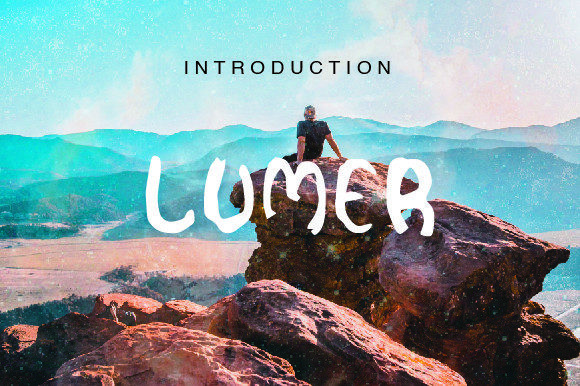
Lumer is characterized by its playful curves and energetic structure. It is designed to grab attention immediately, which is why it excels in short-form applications. Think of it as the visual equivalent of a bright smile in a room full of neutral expressions. For entrepreneurs and small business owners, especially those in the creative industries, food and beverage sector, or education, this font can instantly signal approachability and creativity.
However, the very traits that make Lumer attractive—its whimsy and distinct character—can also lead to misuse. The most critical mistake designers make with fonts like Lumer is overestimating its utility in long-form text. While it looks fantastic as a headline, attempting to use it for body copy will result in reader fatigue. The eye struggles to track irregular shapes over paragraphs, leading to poor user experience on websites or unreadable print materials. Always reserve Lumer for impact zones: headers, logos, call-to-action buttons, and short taglines.
The Pairing Pitfall: Balancing Fun with Function
A frequent error when adopting a bold display font is failing to pair it correctly. Because Lumer is so visually loud, it requires a calm companion. Many beginners try to match it with other decorative fonts, resulting in a chaotic, cluttered design that confuses the viewer. Alternatively, some pair it with overly rigid, traditional serif fonts that clash stylistically, creating a disjointed look that undermines the message.
To avoid this, look for simplicity in your secondary typefaces. A clean, geometric sans-serif often works beautifully alongside Lumer. The contrast between the playful display font and the neutral supporting text creates a hierarchy that guides the reader’s eye naturally. For example, if you are designing a poster for a local children’s workshop, use Lumer for the main title to capture interest, but switch to a simple sans-serif for the date, time, and location details. This ensures that while the design is fun, the essential information remains clear and accessible.
- Do: Use Lumer for headlines under 5-7 words.
- Don’t: Use Lumer for paragraphs or legal disclaimers.
- Do: Pair with minimalist sans-serifs for body text.
- Don’t: Mix with multiple competing display fonts.
Evaluating Context: Where Does Lumer Fit?
Not every brand voice benefits from a "cool and fun" font. If you are a financial consultant, a medical provider, or a legal firm, Lumer might undermine your credibility. In these sectors, trust and stability are paramount, and a playful font can inadvertently suggest a lack of seriousness. Before purchasing or downloading Lumer, ask yourself: Does my audience expect professionalism or playfulness?
For bloggers, educators, and freelancers who specialize in creative fields, however, Lumer is an excellent asset. It helps differentiate your work in a crowded digital landscape. Consider a book cover for a young adult novel or a children’s activity guide. Here, the font becomes part of the storytelling, setting the tone before the reader even opens the page. Similarly, for marketers creating social media graphics, Lumer can increase engagement rates by breaking the monotony of standard templates. The key is alignment with your brand values. If your brand stands for innovation and happiness, Lumer is a natural fit.
Technical Considerations and Licensing
Another overlooked detail is the technical aspect of font usage. Display fonts often have specific kerning issues or ligatures that look perfect at large sizes but fall apart when scaled down. Always preview Lumer at the actual size it will appear in your final design. A title that looks balanced at 72pt might become illegible at 12pt on a mobile screen. Additionally, ensure you have the correct license for your intended use. Whether you are a hobbyist making a personal card or a business producing thousands of brochures, commercial licenses vary widely. Using a font without proper authorization can lead to costly legal issues, so always check the terms provided by the foundry.
Practical Tips for Implementation
To get the most out of Lumer, treat it as a spice rather than the main course. Use it sparingly to enhance, not dominate, your design. Here are a few actionable strategies:
- Test for Legibility: Print your design or view it on different devices. If the letters blur together or feel too cramped, reduce the weight or increase the spacing (tracking).
- Use Color Strategically: Lumer’s shape allows it to carry color well. Don’t be afraid to use vibrant hues that match the joyful nature of the font, but ensure sufficient contrast against the background for accessibility.
- Keep Backgrounds Simple: Busy backgrounds compete with the detailed shapes of Lumer. Solid colors or subtle textures work best to let the typography shine.
By understanding these dynamics, you move beyond simply "using a font" to making intentional design decisions. Lumer is a powerful tool for injecting energy into your projects, but it demands respect for its limitations. When used correctly, it transforms ordinary layouts into memorable experiences. So, the next time you start a new project—be it a brand name, a quote graphic, or a game interface—consider whether your message needs a touch of joy. If it does, Lumer might just be the perfect choice to bring your vision to life.