Evaluating Witch Perfect: A Practical Guide to PUA-Encoded Display Typography
Selecting the right typeface for a design project is rarely a binary decision. It involves balancing aesthetic intent with technical constraints, audience expectations, and workflow efficiency. For designers working on projects that require a distinct, atmospheric, or thematic visual identity—particularly those leaning into horror, fantasy, or vintage aesthetics—the choice of font becomes a critical narrative tool. In this category, Witch Perfect has emerged as a notable option, primarily due to its unique encoding structure and stylistic flair. This evaluation explores what makes Witch Perfect distinct, how it functions within professional workflows, and whether it aligns with your specific creative needs.
Understanding the Core Identity of Witch Perfect
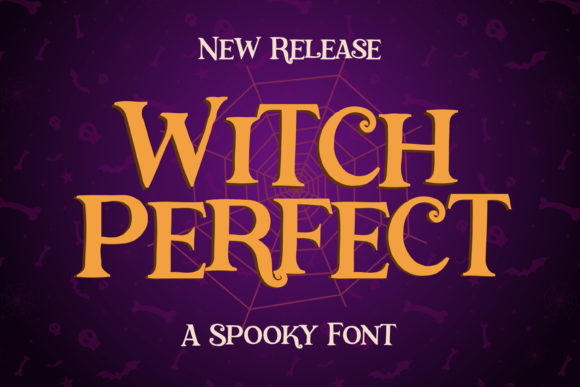
At first glance, Witch Perfect presents itself as a cool and spooky display font. The visual language is unmistakable, characterized by sharp serifs, irregular stroke weights, and an inherent sense of unease that fits well within genres like Halloween branding, gothic literature covers, or supernatural media. However, defining it solely by its appearance misses the technical aspect that truly sets it apart in the digital typography landscape.
The defining characteristic of Witch Perfect is its use of Private Use Area (PUA) encoding. To understand why this matters, one must look at how standard fonts operate. Typically, a font maps characters to Unicode code points. If a designer wants to use a special swash, ligature, or decorative glyph that isn’t part of the standard alphabet, they often have to rely on OpenType features, which can sometimes be finicky depending on the software version or platform. Alternatively, some fonts require manual substitution or complex layering techniques.
PUA encoding bypasses these limitations. By assigning glyphs to the Unicode Private Use Area—a range of code points reserved for private agreement between applications and users—Witch Perfect allows for direct access to its full suite of decorative elements. This means you can access all glyphs and swashes with ease. Instead of hunting through menus or relying on automatic feature activation, you simply type the corresponding character code or select from a provided glyph sheet. This direct accessibility reduces friction in the design process, allowing for rapid iteration and precise control over the visual output.
Technical Implications and Workflow Efficiency
For professionals evaluating Witch Perfect, the PUA architecture offers both significant advantages and potential tradeoffs. Understanding these dynamics is essential for making an informed decision about its inclusion in your toolkit.
Advantages of Direct Glyph Access
- Predictability: Because the glyphs are accessed directly via character codes rather than contextual alternates, the behavior of the text is highly predictable. What you see in your design software is generally what you get in the final export, reducing the risk of unexpected substitutions during print or web rendering.
- Creative Control: Designers can mix and match individual swashes and decorative elements with precision. This is particularly useful for logotypes or headline work where every curve and serif needs to be placed exactly where intended.
- Compatibility with Legacy Systems: While modern design software handles OpenType features well, older systems or certain web environments may struggle with complex font features. PUA-encoded fonts often render more consistently across a wider variety of platforms because they behave like standard characters rather than dynamic font features.
Considerations for Integration
However, the very nature of PUA encoding introduces challenges that must be weighed against these benefits. Since the Private Use Area is not standardized, the mapping of characters to glyphs is specific to the font file itself. This creates a dependency on the font being present on any device or system viewing the content.
- Web Implementation Complexity: Using Witch Perfect on the web requires careful implementation. You cannot simply link to a standard Google Font. You must embed the font using @font-face and ensure that the CSS correctly references the PUA characters. This adds a layer of technical overhead compared to standard web-safe fonts.
- Copy-Paste Limitations: If a user copies text containing PUA glyphs from a document created with Witch Perfect and pastes it into a plain text editor or a system that does not support the font, the characters will likely appear as empty boxes or incorrect symbols. This limits the font’s utility for body copy or any context where text interoperability is required.
- Accessibility Concerns: Screen readers may struggle with PUA characters if they are not properly mapped or labeled. Designers must ensure that decorative text using Witch Perfect does not hinder the experience for users relying on assistive technologies.
Comparative Analysis: Witch Perfect vs. Standard Display Fonts
When comparing Witch Perfect to other options in the display font market, the distinction lies in the balance between artistic freedom and technical convenience. Many contemporary "spooky" or "gothic" fonts rely heavily on OpenType features to provide their variety. While these fonts offer robust functionality, they can sometimes feel restrictive. For instance, a designer might want a specific swash variant that the font’s auto-ligature engine decides not to trigger, leading to frustration.
In contrast, Witch Perfect’s approach empowers the designer to act as the composer. It is less about letting the font decide how letters interact and more about providing a palette of tools for the creator to arrange. This makes it particularly suitable for static designs such as posters, album covers, merchandise graphics, and event flyers. In these contexts, the final output is fixed, and the need for dynamic text resizing or reflow is minimal. The direct access to swashes allows for a level of customization that feels hand-crafted, which is often the desired aesthetic for this genre.
Conversely, if your project involves long-form reading, responsive web layouts, or interactive applications where text flow is paramount, Witch Perfect may not be the optimal choice. Standard serif or sans-serif display fonts with robust OpenType support are better suited for these environments because they maintain readability and consistency across different screen sizes and devices. Witch Perfect shines when the design is controlled and the message is brief but impactful.
Best-Fit Situations and Decision Factors
Determining whether Witch Perfect is the right tool for your next project depends on several key factors. Consider the following scenarios to evaluate its fit:
- Project Type: Is this a short-term campaign, a poster, a logo, or a book cover? If yes, Witch Perfect is a strong candidate. Is this a blog post, a user interface, or a novel? If yes, consider alternatives.
- Aesthetic Goal: Do you need a font that immediately communicates a spooky, magical, or vintage vibe? Witch Perfect delivers this atmosphere effectively. If you need a neutral or modern tone, this font will clash with your brand identity.
- Technical Resources: Does your team have the expertise to handle custom font embedding and PUA character mapping? If you are working in a collaborative environment where files are shared frequently, ensure that everyone has access to the font file to avoid broken links or missing glyphs.
- Output Medium: Will the design be viewed primarily on high-resolution screens or in print? Witch Perfect’s intricate details and swashes are best appreciated in high-fidelity outputs. On low-resolution mobile screens, the fine details may be lost, diminishing the impact of the design.
Practical Application Tips
To get the most out of Witch Perfect, adopt a strategic approach to its usage. Start by experimenting with the swashes individually. Try combining a standard letter with a decorative alternate to create a unique monogram or initial. This technique can add a personalized touch to branding materials without overwhelming the viewer.
Additionally, pay attention to spacing. Decorative fonts often have varying widths and ascender/descender heights. Adjusting kerning and tracking manually can enhance legibility and visual balance. Because Witch Perfect is PUA encoded, you have the flexibility to swap out characters for their decorative counterparts without worrying about breaking ligatures. Use this freedom to create typographic hierarchies that guide the reader’s eye through the design.
Finally, always test your design in its final medium. Preview the text at actual size and resolution to ensure that the spooky details remain clear and that the PUA characters render correctly. This step is crucial for avoiding last-minute surprises during production.
Conclusion
Witch Perfect stands out in the crowded field of display fonts due to its unique combination of atmospheric design and accessible technical structure. Its PUA encoding offers designers a straightforward path to utilizing complex swashes and glyphs, fostering creativity without the technical headaches associated with some OpenType-dependent fonts. However, this comes with the responsibility of managing compatibility and ensuring appropriate use cases. For projects requiring a bold, thematic statement where technical control is feasible, Witch Perfect is a compelling choice. For broader, more dynamic applications, standard fonts with robust feature sets may serve better. By weighing these factors against your specific project requirements, you can determine if Witch Perfect is the perfect fit for your creative vision.